

If you’ve ever asked yourself how to get good marks in an exam, you’re not alone—and the good news is, it’s completely within your reach. Getting top scores isn’t just about long hours of studying; it’s about adopting smart strategies, managing your time well, and taking care of both your mind and body. Whether you’re aiming for school exams or competitive tests, understanding how to get good marks in exam means learning the right techniques and staying motivated every step of the way.
In this guide, we’ll walk you through practical tips and proven methods to help you prepare effectively, boost your confidence, and perform your best on exam day. From creating a solid study plan to managing stress and building a supportive environment, you’ll discover everything you need to turn your hard work into great results.
Proven techniques for effective exam preparation include regular revision, breaking down the syllabus, practicing past papers, staying organized, and managing stress. Focus on understanding the material, take breaks, get enough sleep, and maintain a healthy diet. Here are some effective strategies on how to get good marks in exams-
If you wonder how to learn fast for exams, mnemonics is the answer. Remember, when you were a child, your teachers and parents used to help you memorize via rhymes and songs? Do you still remember all those rhymes? This suggests how powerful mnemonics are for memorizing something.

Paying attention in class is key to exam success. Front benchers often perform better because they engage fully with the material, which helps retain information long-term. Teachers use effective methods, and staying focused in class reduces the need for extra study at home.
When we attend a lecture and understand everything, we think all the information will stay with us forever. However, when we leave the classroom often, most of the facts we hear or learn about also leave our minds instantly. Therefore, it is better to make notes.
Cramming is not the solution, but revising is. Whenever you are studying an important concept, you don’t need to grasp it when you read it for the first time. The answer to how to study effectively for exams lies in continuous revision.
Revising your syllabus 3-5 hours per day is enough to permanently ensure the concepts and knowledge are vested in your mind. The more you revise, the more clarity you gain on each aspect of your syllabus, and the need for cramming is eliminated!
Apart from theoretical subjects or topics, several elements, such as equations, problems, etc., need regular practice. You must create a practice plan for such issues depending upon your strong and weak points.
How to get good marks in exam? You must take breaks between your study schedule to rejuvenate your mind and start preparation afresh every time.
No matter what level of education you are at or what exam you are preparing for, giving mock tests and previous year question papers is a must. It helps you practice in real-time in an intuitive environment to understand what giving an actual exam would feel like. Also, this will help you acquire skills such as time management and ensure that you attempt the question paper in the best possible way.
While giving mock tests, remember to use a timer or stopwatch. Based on your experience giving mock tests, create an exam plan that you will use to take the actual exam.
Again, we are focusing on the fact that cramming never solves any problem. Most students try to find shortcuts on how to learn quickly for exams. When you cram, you tend to remember an answer for a day or, at maximum, a week. But when you understand a concept, you can write an answer explaining the same for the next few years.
Read more: How To Study for Long Hours: Smart Study Habits and Tips
Effective time management is crucial for exam preparation. Balance study time with proper diet, rest, and physical activity for optimal results. If you have additional commitments like a part-time job, use time-management strategies such as creating schedules and prioritizing tasks to maximize your study time.
A healthy body and mind are crucial for effective exam preparation. Eating nutritious meals and staying hydrated boosts brain function and cognitive skills. Key foods like green leafy vegetables, berries, almonds, tea, and fatty fish enhance brain power and concentration, helping you prepare and perform better during exams. Avoid caffeine as it can have long-term negative effects.
Smart study planning and time management can greatly affect how well you prepare for exams. Organizing your study time properly instead of rushing through topics at the last minute will help you stay focused, reduce stress, and improve retention.
Create a Study Schedule
A well-structured study schedule keeps you on track and ensures you cover all subjects in time. Plan your study sessions by allocating specific time slots for each subject. Stick to your schedule and avoid distractions during study hours. A balanced routine prevents last-minute panic and improves productivity.
Prioritize Subjects and Topics
Not all subjects require the same amount of effort. Identify your strong and weak areas and focus on topics that need improvement. If a subject is challenging, dedicate extra time to it while ensuring you don’t neglect the others. Prioritizing topics helps you use your time effectively and gain confidence in difficult subjects.
Use Time Management Techniques
Studying for long hours without breaks can lead to burnout. Instead, try time management techniques like the Pomodoro Technique (study for 25 minutes, take a 5-minute break) to maintain focus. The Eisenhower Matrix helps prioritize urgent and important tasks, making study sessions more efficient.
Avoid Last-Minute Cramming
Cramming the night before an exam can increase stress and reduce retention, making it harder to recall information when needed. Instead, focus on consistent revision over time. Regular practice and spaced repetition are key techniques that enhance long-term memory retention, ensuring that you remember concepts more effectively during exams.
If you’re wondering how to get good marks in exams, the answer lies in effective study planning and time management. By following a well-structured study routine, staying organized, and avoiding last-minute stress, you can prepare more efficiently and perform better on exam day.
Your study space has a big impact on how effectively you learn. Consider these tips for creating an environment conducive to focus and retention:
A well-organized study space can help you enter a productive mindset and maintain focus longer.
Maintaining a positive mindset is essential to overcome challenges during your exam preparation. Here are ways to stay motivated and reduce anxiety:
A confident and calm mindset will enhance both your study efficiency and exam performance.
Success in exams isn’t just about how much you study—it’s also about how well you care for your body and mind. To maximize your concentration and memory retention, ensure you:
You create the best foundation for practical study and exam performance by prioritizing your health.
Studying isn’t just about reading textbooks and taking notes about understanding, remembering, and applying what you learn. Many students struggle with forgetting information right after studying, making revision feel like an endless cycle. But with the right study techniques, you can retain information more effectively and make learning easier. Here are some proven methods to boost memory and improve exam performance.
1. Use Active Learning Methods
Passive reading is one of the least effective ways to learn. Instead of just going through textbook pages, try active learning methods that engage your brain and improve recall.
Effective Active Learning Techniques:
Active learning forces your brain to retrieve information, strengthening memory and understanding.
2. The Feynman Technique: Teach to Learn
One of the best ways to test your understanding is to teach the concept to someone else. The Feynman Technique helps simplify complex topics by explaining them in simple words.
How to Use the Feynman Technique:
You ensure deep learning rather than surface-level memorization by breaking down concepts into easy-to-understand explanations.
3. Spaced Repetition: Review Smartly, Not Repeatedly
Cramming everything the night before an exam might seem helpful, but it’s one of the least effective study habits. Spaced repetition helps you retain information long-term by revisiting topics at increasing intervals.
How to Use Spaced Repetition:
This method prevents forgetting and strengthens memory by gradually reinforcing knowledge.
4. Make Notes Effectively: Write to Remember
Simply copying from textbooks won’t help much. Effective note-taking helps in organizing and recalling information better.
Best Practices for Note-Taking:
Well-structured notes become valuable revision tools instead of just pages of text.
5. Self-Study vs. Group Study: Find What Works for You To Get Good Marks In Exam
Some students prefer studying alone, while others learn better in groups. Understanding when to use each method can make a big difference.
Self-Study: Tips for exams
Group Study:
Using a mix of both can provide the best learning experience.
6. Create a Distraction-Free Study Environment
Even the best study techniques won’t work if you’re constantly distracted. Find a quiet place to study where you can focus without interruptions.
Tips for Better Focus:
A structured environment improves focus, making study time more productive.
7. Relate Information to Real-Life Examples
Memorizing dry facts is tough, but connecting concepts to real-life examples makes them easier to remember.
How to Apply This Technique:
When concepts feel relevant, they become easier to recall.
8. Practice, Practice, Practice!
Reading alone won’t help much—solving problems and practicing questions improves understanding and application.
Best Ways to Practice: How to study for exams
In addition to reading and note-taking, try these proven techniques:
Experiment with these techniques to find what suits your learning style best.
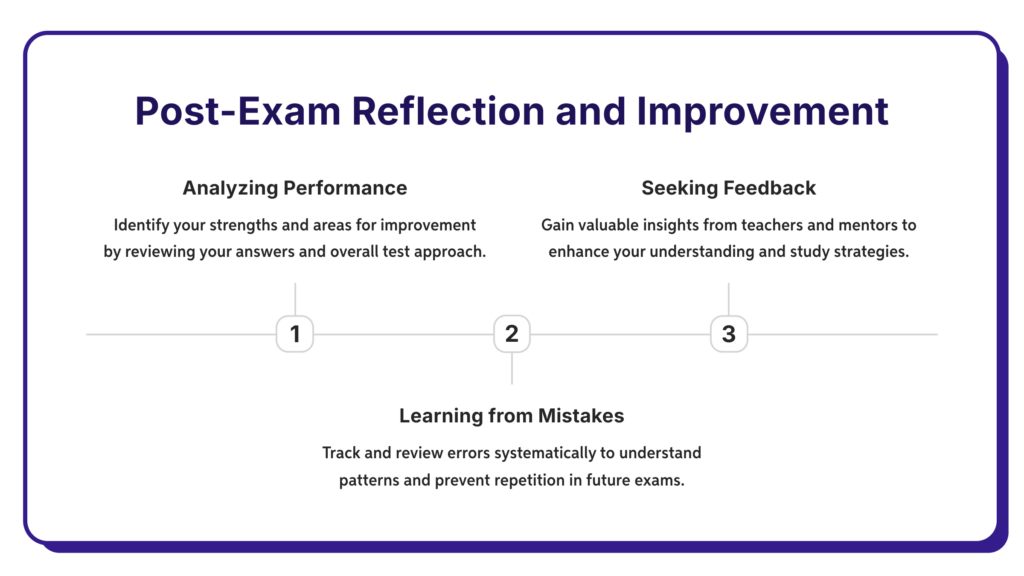
Technology can be a powerful tool if used wisely during exam preparation:
Smart use of technology can enhance your learning experience and keep you engaged.
Practicing with past exam papers and mock tests is one of the most effective ways to prepare. It helps you understand exam patterns, improve speed, and boost confidence.
Your support system can significantly impact your exam preparation:
Strong support networks help sustain motivation and provide balance during stressful times.
On exam day, it’s natural to feel nervous, but managing your stress can help you perform your best. Keep these tips in mind:
Following these strategies will help you maintain focus and perform confidently.
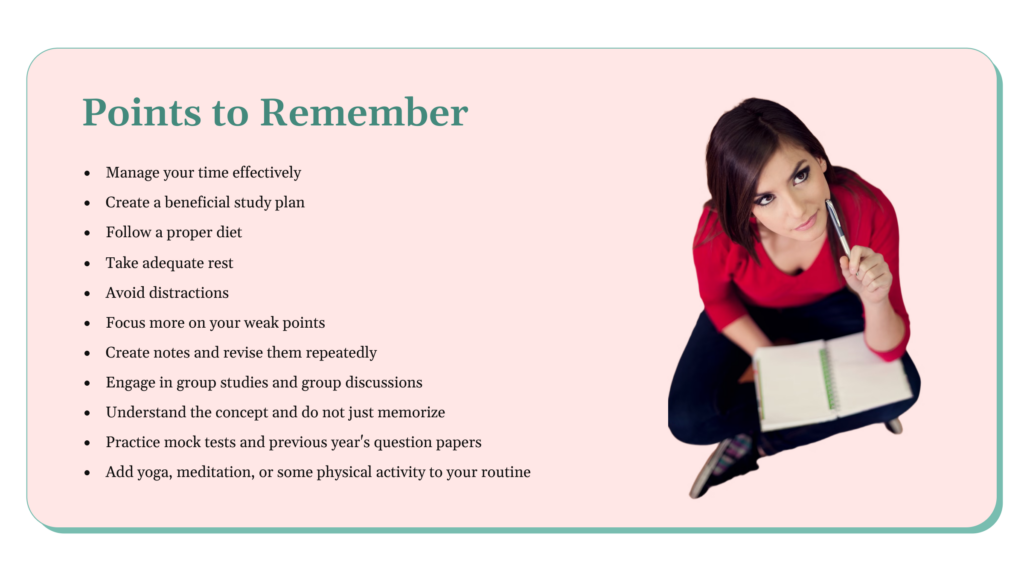
Remember, getting good marks in an exam isn’t just about memorizing facts—it’s about preparing smartly, staying positive, and taking care of yourself throughout the journey. By combining effective study habits, a confident mindset, and the support of those around you, you can turn your goals into real achievements.
Exams are an important milestone, but they’re just one part of your learning adventure. Believe in your abilities, trust your preparation, and approach every test with calm and focus. With these strategies in hand, you’re not only ready to get good marks but to succeed in whatever you set your mind to. Good luck, you’ve got this!

The first step is to identify the most scoring questions and attempt them as a priority. Spend more time on the difficult questions with the most score- during your preparation and examination. Time management is the key, and you must know how to manage your time while preparing and giving the exam. Prepare notes, revise repeatedly, practice mock tests, and get your concepts clear to achieve a 90% score.
To score 100% in your exam, follow a structured study plan to get good marks in the exam, focus on understanding concepts, and practice the previous year’s papers. Use active learning techniques, revise regularly with spaced repetition, and manage time effectively. Stay consistent, avoid distractions, and maintain a healthy lifestyle for better focus and retention. Confidence and discipline are key!
To become a topper, develop a consistent study routine, focus on concept clarity, and practice time management. Use smart study techniques, revise regularly, and stay disciplined. Avoid distractions, maintain a positive mindset, and prioritize health and stress management for peak performance. Consistency and confidence are key!
Music can help you study, but it depends on the type. Soft instrumental music or nature sounds can improve focus and reduce stress, while loud or lyrical songs may be distracting. Try different styles to see what helps you stay focused and motivated!
The 1357 Rule is a time management strategy where you complete 1 big task, 3 medium tasks, 5 small tasks, and 7 tiny tasks each day. This approach helps stay organized, reduce stress, and improve productivity, which can lead to better exam performance. By effectively managing your tasks, you can focus on important subjects and revise consistently, ensuring you’re well-prepared for exams.
How to Become a Straight A+ Student-
1. Review your notes from class immediately after.
2. Do the bulk of your studying during the day.
3. Try to read ahead rather than play catch-up.
4. Teach the material to someone else.
5. Create a study schedule from day one.
6. Organize your books and materials.
Take a look:
1. Assign Enough Time To Each Subject.
2. Focus on NCERT Books.
3. Know Where You Lack in Your Studies.
4. Prepare Short Notes.
5. Focus On Your Writing Skills.
6. Find Out Topics With High-Weightage.
7. Revision is Important.
8. Avoid Reading the Night Before the Exam.
To achieve 100% in your exam, follow these steps:
1. Understand the syllabus: Familiarise yourself with the exam topics and weightage.
2. Create a study plan: Allocate time for each subject, ensuring coverage of all topics.
3. Use quality resources: Gather textbooks, online materials, and revision guides tailored to the exam.
4. Practice past papers: Complete previous exam papers under timed conditions to improve familiarity and time management.
5. Join study groups: Collaborate with peers to discuss difficult topics and share resources.
6. Seek help: Ask teachers or tutors for clarification on complex subjects.
7. Revise regularly: Schedule regular revision sessions to reinforce your memory.
8. Stay organised: Keep notes tidy and summarise key points for quick revision.
9. Focus on health: Ensure adequate sleep, nutrition, and exercise to maintain concentration.
10. Stay positive: Develop a positive mindset and confidence in your abilities.
Create a study schedule and stick to it.
Review past exam papers and practice questions.
Focus on understanding concepts, not just memorisation.
Break down study material into manageable sections.
Use visual aids like mind maps and flashcards.
Form study groups to discuss and clarify topics.
Take regular breaks to maintain focus and retention.
Ensure a good night’s sleep before the exam.
Read instructions carefully during the exam.
Manage your time effectively during the exam.
Create a study schedule and stick to it.
Break down the syllabus into manageable sections.
Use active learning techniques, such as summarising and teaching concepts to others.
Practice past exam papers under timed conditions.
Focus on understanding concepts rather than rote memorisation.
Join study groups for collaborative learning.
Take regular breaks to improve focus and retention.
Stay organised with notes and resources.
Review regularly to reinforce knowledge.
Use mnemonic devices to aid memory.
To score 70% in an exam, follow these steps:
Review the syllabus and identify key topics.
Create a study schedule allocating time for each subject.
Use active learning techniques such as summarising notes and teaching concepts to others.
Practice past exam papers to familiarise yourself with the format and types of questions.
Focus on understanding concepts rather than rote memorisation.
Join study groups for collaborative learning.
Stay organised and keep track of deadlines and exam dates.
Get adequate rest and maintain a balanced diet leading up to the exam.
Manage your time efficiently during the exam to answer all questions.
Stay calm and confident, and read each question carefully before answering.